Website Design
A website redesign isn’t merely about a fresh look—it’s an investment with real returns. Our team works closely with yours to deliver a modern, intuitive design that leads to higher conversions and more leads. Your new website will build trust with prospects and capture new sales opportunities.
Want to learn more about a website redesign?
We redesigned Smith-Midland Corporation's website to be bold, modern, and to incorporate videos. Learn more about the design process here.
Inbound Marketing
Whittington Consulting's inbound marketing services are designed to attract, engage, and delight your target audience, driving more qualified leads to your business. By leveraging strategic content creation and data-driven insights, we ensure sustainable growth and measurable results.
Get Help With Your Marketing
An aligned marketing & sales strategy helped Gather Workspaces achieve more than $950,000 in revenue, 67% increase in tours, 33% increase in members and accelerated pipeline velocity.
HubSpot Support
As a certified HubSpot Platinum Solutions Partner with over 12 years of specialized experience, we're here to help you maximize every aspect of HubSpot's powerful growth suite of marketing and sales tools.
HubSpot Portal Audit
Learn how we set up HubSpot CRM for an HR Consulting firm to match their unique sales process and make their team more efficient.
Blog
Marketing Lead Generation Tip: Using Contact Forms Effectively
In today’s digital world, more consumers than ever use the internet to research and make decisions on products and services. How your organization handles website lead conversion is vital to your ...
How to Build Accurate B2B Buyer Personas in 4 Steps
Before your company does marketing of any sort, you have to know who you’re selling to. Defining that target is not enough, though. If your marketing is going to hit the mark, you have to understand ...
Build B2B Brand Visibility Online Through Consistency
In advertising, brand is everything.
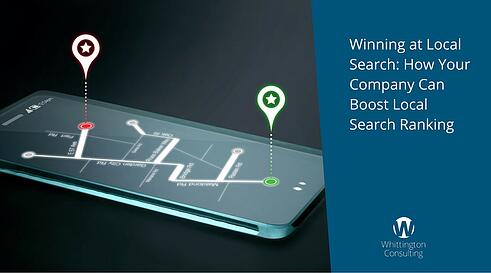
How Your Company Can Boost Local Search Ranking
For companies that do business in a localized region, local search engine optimization (SEO) is an important part of establishing an online presence. For some companies, however, this is a difficult ...
What Does "Community" Mean for B2B Digital Marketing?
B2B businesses often approach social media marketing with an attitude that “bigger is better.” They eagerly believe that the more followers, the better. The more likes, the better. The more tweets at ...
Online Reputation Management for Local B2B Businesses
Local B2B businesses often face an uphill climb. You’re competing with regional and perhaps even global brands in your industry, and trying to take advantage of local business opportunities without ...
Trouble Recruiting? Turn to Your Internet Presence For Help
You’re in business because you provide the best products and services to your customers. So when it comes time to expand your business, of course you only consider the best candidates! Unfortunately, ...
LinkedIn Sponsored Updates for B2B Lead Generation
Who says B2B companies can't use social media to generate leads? If you're an intermediate LinkedIn user, I would encourage you to look into LinkedIn Sponsored Updates. Note: If you're a Linkedin ...
Clever Social Media Tips to Make the Most of Your Next Trade Show
In my daily reading, I came across a blog post on the MarketingProfs website called "A Guide to Using Social Media at Tradeshows." There's some good advice there about how companies can start using ...
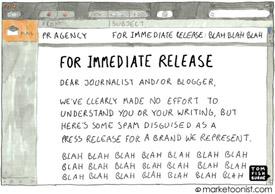
How To Make Your Press Releases Interesting To Website Visitors
Let's be honest, your prospective customers don't want to read press releases. Think about the last press release you read. Odds are it was pretty dull and sounded almost robotic. Press releases are ...
Why Photography is an Important Consideration for Website Redesign
Ask any web designer and they’ll tell you that the visual quality of a website is heavily dependent on great photography. It’s true, great photography helps to tell your website visitors what you do, ...
Why Small Businesses Need Local SEO
Try this: Do a Google search on “web design.” You will almost certainly see search results that include web design firms from your very own city, without having typed in its name. Even businesses ...
6 Reasons Why You Need to Outsource Your Company Website
It's tempting to say you'll manage your website and online marketing efforts in-house. "It's cheaper than hiring an online marketing firm." "It's easier to update the website myself than pick up the ...
Why you should include your phone number in your e-mail signature
Time and time again, I've seen that truly successful people (and companies) pay attention to the "little things." This post is about one of those little things -- specifically e-mail signatures.
PPC management: 5 reasons why "set it and forget it" doesn't work
When discussing PPC with prospective client, I often get the question of can I just "set it and forget it"? The "set it and forget it" method of pay per click management is when you would set up a ...
Stay Informed
Subscribe to The Digital Slate from Whittington Consulting